Can We Prevent Trauma?
Not all trauma can be prevented of course. However, if we are armed with how to respond to trauma, we can handle these unforeseen circumstances much better. While many of us are still in the healing stages of post-trauma, we need to immediately reassemble our identities so that way our new foundation being built can withstand future storms that are sure to come in some way or another. When we build our house upon the rock, the wind may blow, but we're standing solid in Christ Jesus.
Lila De La Cruz
11/5/20254 min read
Reassembling Our Identity on the Rock
Not all trauma can be prevented, of course. However, we can lessen the blow of trauma, and preserve our minds through having a firm identity in Christ.
The truth is there is no end to healing from trauma. This is why it's important to allow God to excavate our lives and become our foundation in identity—so the new foundation being built can withstand future storms. Healing is freedom in Christ when we choose His will and purpose for our lives.
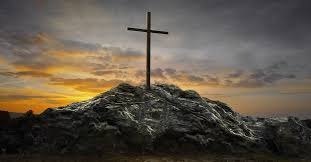
When we build our house upon the rock, the wind may blow, but we’re standing solid in Christ Jesus.
“Therefore everyone who hears these words of mine and puts them into practice is like a wise man who built his house on the rock. The rain came down, the streams rose, and the winds blew and beat against that house; yet it did not fall, because it had its foundation on the rock.
But everyone who hears these words of mine and does not put them into practice is like a foolish man who built his house on sand. The rain came down, the streams rose, and the winds blew and beat against that house, and it fell with a great crash.”
Matthew 7:24–27 (NIV)
A rock is a solid, immovable surface. That’s who Christ is—unchanging and steady. Sand is made of very fine particles, formed from the wearing down of rocks. A particle is a tiny portion of matter, and that’s what we are—tiny portions of the Creator Himself.
“For in him we live and move and have our being. As some of your own poets have said, ‘We are his offspring.’”
Acts 17:28 (NIV)
“He is before all things, and in him all things hold together.”
Colossians 1:17 (NIV)
“Then God said, ‘Let us make mankind in our image, in our likeness, so that they may rule over the fish in the sea and the birds in the sky, over the livestock and all the wild animals, and over all the creatures that move along the ground.’
So God created mankind in his own image, in the image of God he created them; male and female he created them.”
Genesis 1:26–27 (NIV)
We literally are a part of God. We are His offspring—extensions of His being, created in His image. That’s why finding our identity in Christ is the only firm foundation that can hold us steady.
More often than not, identity often becomes our “god.” We attach our worth to titles or roles—“I’m a good mother,” “I’m a doctor,” “I’m a wife.” But what happens when those things are shaken or stripped away? Who are we then?
We were never meant to find identity in what we do or who we’re with, but in who God says we are. Building identity takes effort—it’s what gives it value. Character is always in progress, and it takes time to build anything valuable and that time it takes to build character teaches us to trust God with the process.
God is always specific about where He places us. He knows our character, our weaknesses, and our readiness for what’s next. Sometimes, the very voice that tears down our identity can be the voice of someone we’ve let close—maybe even a partner. That’s why discernment is so important. We must be careful whose voice we allow to shape our sense of self—especially if that person doesn’t have their own identity rooted in Christ.
Spend time with God. Learn who He is and who you are in Him. Don’t use this blog, other blogs or the teachings and discoveries of others be in place of your time with Him. If we had time to read this blog, we had time to read our Bible. The best direction to turn is always toward God.
We can try to take things into our own hands, but when we go our own way, we often end up lost and right back where we started. This is why building on sand, or within ourselves, to find our identity, brings more harm than healing in the end. To learn our new identity, we have to let God excavate our hearts and minds. Only He can uproot the things that need to be unlearned.
Part of that process involves removing sin before rebuilding the foundation. Sometimes God will even remove our desire for sin before He brings us to repentance—sinful behavior is also a form of self-harm. It creates a cycle of shame and condemnation that promote unhealthy habits in us. We have to begin to re-associate our responses to triggers and stress, and even our idea of pleasure, with the things of God. So, instead of smoking that cigarette when you feel tired and overwhelmed, start to pray. These practices is the practice of excavation. Excavation is the process of removing an old foundation to lay a new one. It's often used in farming to plant crops. You have to uproot the old, to bring in the new!
"let us not become weary in doing good, for at the proper time we will reap a harvest if we do not give up."
Galations 6:9 (NIV)
“The thief comes only to steal and kill and destroy; I have come that they may have life, and have it to the full.”
John 10:10 (NIV)
God doesn’t shame or condemn us. Shame and condemnation only come from the enemy. We were never created to live under either of those things. We are the Bride of Christ—loved, pursued, and redeemed.
“Husbands, love your wives, just as Christ loved the church and gave himself up for her.”
Ephesians 5:25 (NIV)
If we want to live a life that endures, we must build it on Him—the solid, immovable Rock. Every other foundation will crumble. We can not make ourselves a firm foundation.
If you’re ready to start rebuilding your life and discovering who you are in Christ, click these links to begin your journey to a new solid foundation and identity in Christ!
https://re-assembledlife.com/identity-blueprint
https://re-assembledlife.com/coaching